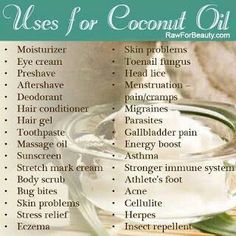
COCONUT OIL
FOOD USES
1. Cooking
at High Heat (Sautéing and Frying) – Coconut oil is great for cooking at a high
heat because of its high smoke point. Many other oils like olive oil can
oxidize when heated but because coconut oil is made up of healthy saturated
fats it remains stable under high temperatures.
2.
“Buttering Your Toast” – For breakfast
in the morning, try spreading coconut oil on your sprouted grain bread, instead
of conventional butter. The slight coconut flavor, more pronounced in the
unrefined coconut oils, lends a lovely aroma and taste to your toast.
3. Natural
Energy Booster – The medium chain triglycerides in coconut oil, when partnered
with chia seeds, will give you an energy boost when you need a mid-afternoon
pickup, or after a strenuous workout. Chia seeds are known to boost performance,
and endurance while the coconut oil aids in digestion and metabolizing of the
chia seeds. Mix 1 tablespoon coconut oil with ½ tablespoon of chia seeds, and
enjoy from the spoon, or spread on sprouted grain bread.
4. Boost
Nutrients in Smoothies – Add 1 to 2 tablespoons of coconut oil to any fruit
smoothie for a boost of cholesterol fighting compounds. Side benefit? It
improves the texture and mouth feel of smoothies, while adding healthy fats to
your diet.
5.
Replacement for Non-stick Cooking Spray – In a non-stick skillet, sometimes
eggs still stick. With coconut oil, that is no longer a problem. Add just a
teaspoon or two of coconut oil to the pan, and melt. Add the eggs and cook as
desired. Cleanup will be a breeze.
6. Create
Healthy Homemade Mayonnaise – Use as oil in homemade mayonnaise recipe mixed
with egg yolks. In a blender, combine 4 egg yolks, 1 tablespoon apple cider
vinegar, and ½ teaspoon dried mustard. Blend until combined. With blender still
running, slowly add 1 cup coconut oil (melted), and ½ cup olive oil to create
an emulsion. If you add the oils too fast, the mayo will break. If this
happens, all is not lost; add ½ tablespoon of tahini, and blend until smooth.
7. Replace
Unhealthy Fats When Baking – Yes, you can bake with coconut oil. Use the same
amount as butter or vegetable oil that is called for in the recipe. Use coconut oil to grease baking sheets and
cake pans, and your baked goods will simply slide right out.
8. Sports
Drink Replacement – Coconut oil gives the body quick energy in the form of its
quick acting MCFA fats. Instead of relying on sugary processed drinks, try
adding coconut oil and chia seeds to water with fresh fruit.
9. Natural
Throat Lozenge – Use coconut oil in place of store-bought lozangers that are
usually made using artificial flavors and colors. Try swallowing ½-1 teaspoon
of coconut oil up to 3 times daily to
ease the pain of a sore throat or cough, and combine licorice root tea with
coconut oil for a natural throat soother. Try adding licorice root (fennel
root), honey, and lemon too for an extra immunity boost again viruses and
colds.
COCONUT OIL BEAUTY & SKIN USES
1. Natural Skin Moisturizer – Using Coconut oil for skin
health works well as a moisturizer for your face. It absorbs quickly, and is
non-greasy. At room temperature, coconut is a solid, but it quickly melts when
it comes into contact with hands.
2. Wrinkle Reducer – For areas of concern around eyes, dab
just a touch around the eyes to help fight pre-maturing aging. Leave the oil on
overnight to soak in, and wake up looking refreshed. Combine with frankincense
oil for additional anti-aging benefits.
3. Healing Bath with Epsom Salt – Regardless of the season,
our skin takes a beating. Add ¼ cup Epsom salts and ¼ cup coconut oil to a warm
bath, and relax. Add a drop or two of your favorite essential oils to add
aromatherapy benefits. The Epsom salts will help to draw out toxins while the coconut
oil will help to soothe dry skin.
4. Lip Balm – Dry chapped lips can happen during any
season. Commercial lip balms are packed with unhealthy (and potentially toxic)
ingredients, which is particularly concerning since we put them on our lips.
The healing properties of coconut oil helps to nourish the lips, provides a
touch of sun protection, and most importantly, is safe to consume. Combine 2
tablespoons of coconut oil with 2 tablespoons of beeswax, and 1 tablespoon of
shea butter in a nonstick saucepan. Warm slowly until melted. Use a small
funnel to refill used lip balm containers. Allow to set up for 6 hours.
5. Wound Salve – Coconut oil has been used for thousands of
years to speed healing of rashes, burns, and open wounds. You can use it just
like you would neosporin. To make a homemade neosporin mix coconut oil,
frankincense, lavender and melaleuca oil. The antibacterial and antifungal
properties of coconut oil help to keep the area free of infection, and the
lauric acid in coconut oil helps to speed healing.
6. Cellulite Solution – To fight stubborn and unsightly
cellulite, mix 1 tablespoon of coconut oil with 10 drops of grapefruit
essential oil and massage in a firm circular motion into affected areas. Follow
with dry brushing to help stimulate circulation and encourage cellular detox
and my cellulite slim down juice recipe for best results.
7. Massage Oil – Coconut oil is a soothing and conditioning
massage oil. Add a couple of drops of lavender oil and peppermint oil to help
heal sore muscles, and stimulate mindful relaxation.
8. Anti-Fungal Cream – Due to its antibiotic capabilities,
coconut oil can be used topically to treat athletes foot and skin fungus. Apply
some to the affected area and either leave it on or wipe off with a paper towel
after it has time to set in.
9. Nail Cuticle Oil – Apply coconut oil to your finger beds
to reduce the risk of developing fungal infections and to make it easier to
push back cuticles so your nails can naturally grow more quickly.
10. Soothing Foot Rub for Cracked Heels – Find relief for
your dry, cracked heals naturally by rubbing them with coconut oil and allowing
the oil to penetrate your skin. Try using 2 tablespoons of oil for both heels,
and feel free to add other essential oils- like lavender oil- which can help to
further reduce dryness and bacteria, plus give your feet a nice, relaxing
scent.
11. Natural Hair Conditioner – Using Coconut oil for hair
conditioning has been used for thousands of years to strengthen and style hair.
As a moisturizer, coconut oil can help strengthen hair while helping hair to
retain moisture. Depending on the length and texture of your hair, you may need
anywhere from 1 teaspoon to 2 tablespoons of coconut oil as a conditioner. Warm
in the palms of your hands, and starting at the ends, work the oil into the
hair.
12. Hair De-tangler for Children – Use a small amount of
coconut oil on your children’s’ hair when it’s extra nutty and needs a natural,
smooth solution for getting it brushed easily. Rub oil between your palms and
then onto wet hair before combining through.
COCONUT OIL HOUSEHOLD USES
1. Remove Gum From Hair or Furniture – If you’ve ever had
gum stuck in your hair or on your coach, you know how frustrating this can be.
Apply coconut oil to help the gum let up and easily get removed, without
leaving any colors or stains.
2. Dust Preventer – Trying using a small amount of coconut
oil on surfaces like wood, plastic, or cement that tend to gather dust. Rub a
small amount of oil over the area and then allow it to dry, no need to wash it
off or worry about it staining and attracting any bacteria.
3. Shoe Shiner – Instead of buying a leather repair kit or
bringing used shoes to a repair shop, try subbing some coconut oil on your
leather boots or patent heels to give them shine, disguise blemishes, and make
them look fresh and new again.

4.
Furniture Polish – Use coconut oil on wood, granite
counter tops, and
metal surfaces to give your furniture and updates and clean,
shiny look. At the same time this will help reduce dusk, cover up scratches,
and clean your furniture and home surfaces too.
5. Rust Reducer – Rub some oil on your silver wear, outdoor
metal furniture, car parts, or anything else that is metal and prone to
rusting. Coconut oil helps to combat rust when you spread a thin layer of pure
oil over the metal and let it sit for 1-2 hours. You can either wipe the oil
off or wash it afterwards and should notice a difference right away.
COCONUT OIL MEDICINAL USES
1. Fight Inflammation – Coconut oil supports both a healthy
liver, and kidneys. According to researchers, virgin coconut oil, prepared
without chemical or high-heat treatment exhibits an inhibitory effect on
chronic inflammation. As inflammation is one of the leading causes of many
chronic diseases, this study supports regular consumption of virgin coconut oil
to help fight inflammation.
2. Boost Immunity – Coconut oil’s unique nutrition profile
that is rich with lauric acid, capric acid and caprylic acid provides for
strong antiviral, antifungal, antimicrobial, and antibacterial properties that
have an immune boosting effect. By fighting these elements present in the body,
the immune system is better equipped to respond properly when attacked.
3. Prevent Bone Loss and Osteoporosis Risk – Free radicals
and oxidative stress are linked to the development of osteoporosis, a metabolic
disorder. According to a recent study, virgin coconut oil is effective in
maintaining bone structure, and preventing bone loss in estrogen-deficient
rats. The report specified virgin coconut oil due to its high polyphenols and
exerts antioxidant properties and you should take 3 tbsp daily for best
results.
4.
Alzheimer’s Treatment and Brain Health Protector – There
are several reports that coconut oil may be an effective natural treatment for
alzheimer’s disease. A current double blind study recommends taking 1 tbsp 3x
daily.
5. Sleep Aid – Coconut oil is a perfect carrier oil when
making soothing and relaxing home remedies using essential oils, like lavender
or roman chamomile oil, that can help reduce anxiety and aid in getting a good
night sleep.
6. Cancer Protection and Defense – Coconut oil and
medium-chain triglycerides have been shown to provide a “potent antitumor
effect and maintenance of a normal immune system” supporting the belief that
coconut oil can help protect from certain types of cancers.

7.
Candida Killer – Coconut oil contains
caprylic acid
which has
anti-microbial properties that can kill yeast and candida. In a
recent study, researchers found that coconut oil was active against species of
Candida at 100% concentration,
greater than the drug fluconazole. Add 1
tablespoon of coconut oil to your diet, and apply pure coconut oil directly to
affected areas twice per day, until symptoms resolve.
Follow my candida
treatment protocol to help beat Candida. RoyalHealingND.com
8. Fat Burning Supplement – The MCT’s found in coconut oil
have been proven to support weight loss and help your body burn fat for energy. It must sounds odd to add fat to your diet to burn fat??? But the truth is not all
fats are created equal. Add a tablespoon a day to reap the benefits of these
fatty acids that may help to reduce abdominal fat. According to a study
published in the American Journal of Clinical Nutrition, consumption of MCT oil
leads to a greater rate of weight and fat mass loss than olive oil.
9. Hormone Balancer – The healthy fats in coconut oil
support the thyroid and adrenal glands which can lower cortisol to naturally
balance hormones. Coconut oils helps to suppress inflammation, while supporting
healthy metabolism, two things that are essential for balanced hormones. The
lauric acid, and other compounds support the thyroid and adrenal glands. This
helps to lower cortisol, and naturally balance the hormones.
10. Digestive Support – Coconut oil is easy to digest and
contains compounds that destroy bad bacteria, promote growth of probiotics and
helps heal leaky gut. Coconut oil promotes the growth of healthy probiotics in
the digestive tract. The antibacterial,
antifungal, and antimicrobial properties help to control parasites, and fungi,
while aiding in the efficient absorption of essential nutrients.
11.
Blood Sugar Stabilizer and Diabetes Preventer – Coconut
oil can help balance blood sugar levels and has been medically proven to
improve
diabetes. Coconut oil can help balance blood sugar levels by encouraging
efficient secretion of insulin from the pancreas. In a 2009 study, researchers
found that medium-chain fatty acids “may therefore be
beneficial for preventing
obesity and insulin resistance.”
12. Ezcema and Psoriasis Cure Treatment – Coconut oil can be
used as cream to naturally heal dry and flaking skin for those with Eczema and
Psoriasis. Mix coconut oil, shea butter and geranium oil for the best benefits.
13. Balance Cholesterol Levels – The healthy fats in coconut
oil have been proven to increase HDL cholesterol and lower LDL cholesterol
supporting heart health. According to a study reviewed by Harvard Medical
School, coconut oil consumption increases HDL cholesterol, and improves the
cholesterol ratio.
14. Constipation Relief – Many people swear by coconut to
cure chronic constipation and relieve bloating. Try taking one tablespoon of
coconut oil in the morning or before bed in order stay regular. The oil
penetrates the digestive track and keeps things running smoothly by killing off
harmful bacteria and allowing your gutflora to re-balance.
15.
Fight Heart Disease– After decades of coconut oil being
vilified due to its saturated fat content, new research is now proving that
medium-chain fatty acids and coconut oil are
beneficial to heart health and
help lower high blood pressure.
THE CHOICE IS YOURS:
Dr. Ezenwanyi Ahaghotu
2717 Commercial Ctr Blvd.
Katy, TX 77494
P: 832-913-5022
info@RoyalHealingND.com

 One of the major advances in nutritional medicine has been the ability to produce a fish oil supplement that is highly concentrated source of long-chain omega-3 fatty acids and also free from damaged fats (lipid peroxides), heavy metals, environmental contaminants, and other harmful compounds.